Who Was Pompeo Batoni? The Grand Tour Painter Behind Allegory of the Arts
Pompeo Batoni: The Master of the Grand Tour
Pompeo Batoni, 1708–1787
Italian Painter
Rome, Italy
Although his name is less familiar today than those of Raphael or Caravaggio, Pompeo Batoni was considered one of the greatest painters in Europe during the eighteenth century. Kings, popes, emperors, and aristocrats competed to commission portraits from him, while wealthy travelers crossing Italy on the famous Grand Tour eagerly sought to have their likeness painted by the celebrated master. Blending the elegance of the Rococo with the balance of classical antiquity, Batoni helped bridge the gap between the Baroque and the emerging Neoclassical movement, earning a reputation as one of Rome's most accomplished artists.
Born in Lucca in 1708, Batoni was the son of a goldsmith, and his early exposure to craftsmanship helped shape his extraordinary attention to detail. After moving to Rome in 1727, he studied under several respected painters while spending countless hours sketching ancient Roman sculptures and reliefs. His first major breakthrough came almost by chance in 1732, when a nobleman sought shelter from a rainstorm and discovered the young artist drawing on the Capitoline Hill. Impressed by Batoni's remarkable talent, the nobleman commissioned an altarpiece that launched his independent career.
By the middle of the eighteenth century, Batoni had become the most fashionable portrait painter in Rome. Hundreds of wealthy British gentlemen visiting Italy during the Grand Tour commissioned portraits that placed them among ancient ruins, classical sculptures, and Italian landscapes. These paintings became treasured souvenirs of their travels and helped spread Batoni's reputation throughout Europe. His success was so great that later artists, including Sir Joshua Reynolds, adopted many of the same conventions that Batoni had perfected.
His patrons extended far beyond British travelers. Batoni painted kings and queens of Portugal and Poland, Holy Roman Emperors Joseph II and Leopold II, Popes Benedict XIV, Clement XIII, and Pius VI, as well as numerous cardinals, nobles, and diplomats. Contemporary writers often described him as the finest painter working in Italy, and his rivalry with the German painter Anton Raphael Mengs became one of the defining artistic competitions of the eighteenth century. While Mengs approached painting through strict intellectual theory, Batoni was admired for the natural elegance and effortless beauty of his compositions.
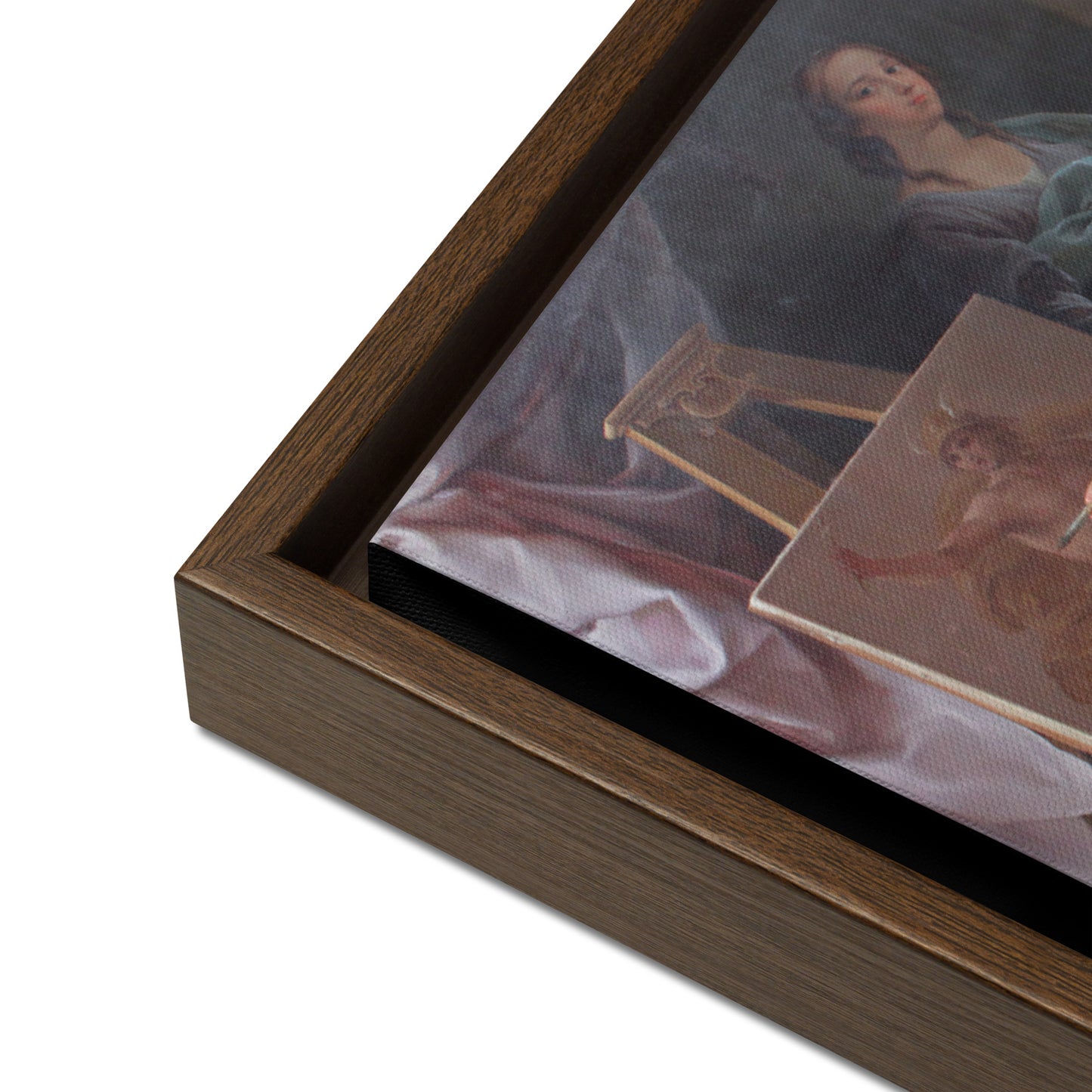
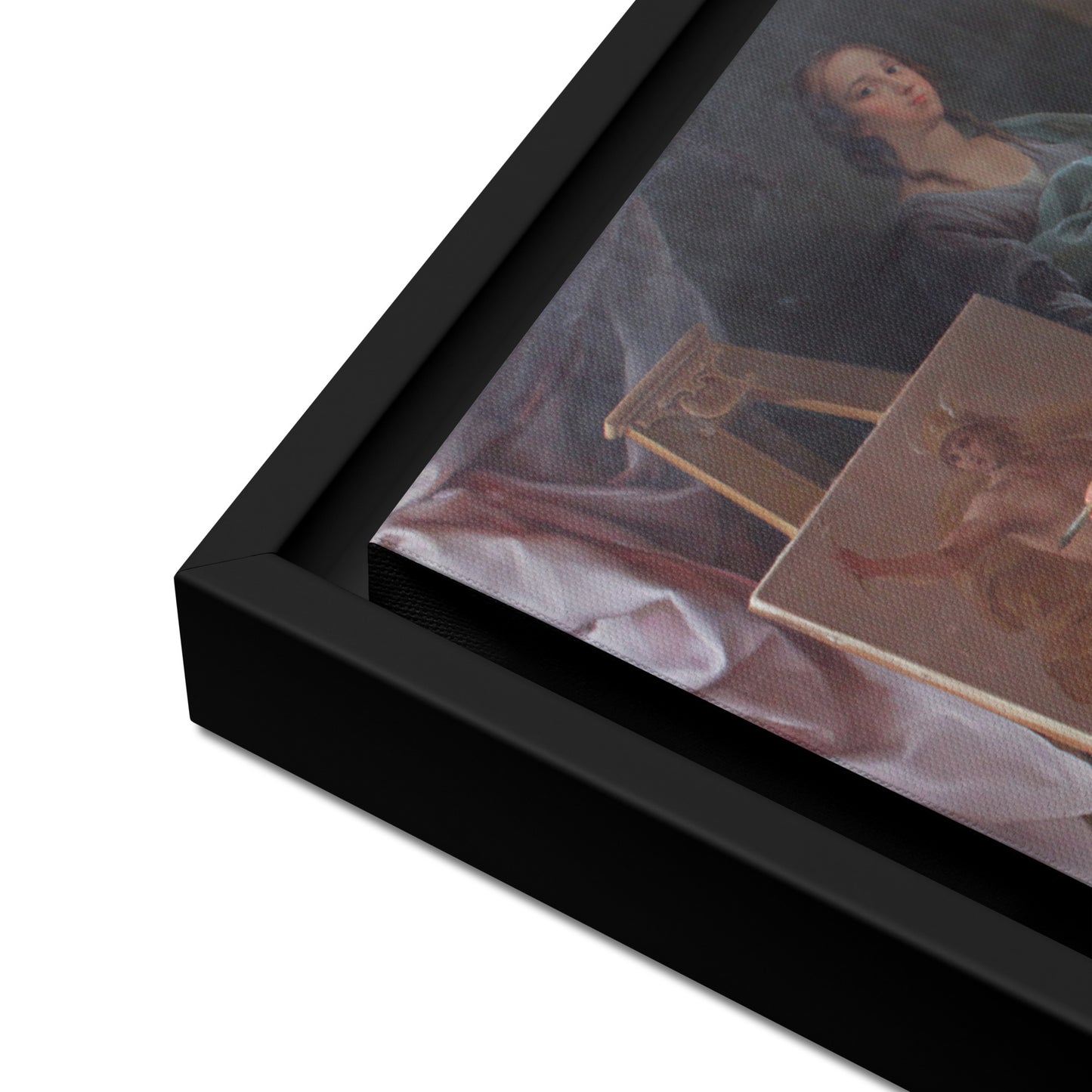
Alongside his celebrated portraits, Batoni produced magnificent religious, mythological, and allegorical paintings. One of the finest examples is Allegory of the Arts, completed around 1765. In this remarkable self-portrait, Batoni presents himself standing confidently before his easel while displaying a painting filled with allegorical female figures representing the noble arts. Rather than simply portraying himself at work, Batoni elevates the role of the artist, suggesting that painting, sculpture, music, poetry, and architecture are divine pursuits worthy of the highest intellectual respect. The composition serves as both a personal statement and a celebration of artistic creativity itself.
Batoni's style drew inspiration from Raphael, Nicolas Poussin, Claude Lorrain, and the art of classical antiquity. His paintings combine flawless draftsmanship with luminous color, graceful figures, and carefully balanced compositions. Unlike the dramatic theatricality of the Baroque or the playful excess of the Rococo, Batoni pursued harmony and refinement, qualities that made him a leading figure in the development of Neoclassicism. His technical mastery is especially evident in the luxurious fabrics, idealized faces, and polished surfaces that characterize his work.
Despite being one of the most celebrated painters of his lifetime, Batoni's reputation gradually faded during the nineteenth century as artistic tastes shifted toward Romanticism and Impressionism. It was not until the twentieth century that scholars began to reassess his extraordinary achievements. Major exhibitions in Lucca, London, New York, Houston, and the National Gallery in London introduced his work to new audiences, restoring his place among the great masters of eighteenth-century European art.
Today, Pompeo Batoni is recognized as one of the last great painters of the Italian Baroque and one of the earliest champions of Neoclassicism. His portraits captured the elegance of an age, while works like Allegory of the Arts reveal his deep belief in the enduring power of artistic creation. More than two centuries after his death, Batoni's paintings continue to demonstrate why he was regarded by his contemporaries as the finest painter in Rome and why his legacy deserves renewed appreciation today.