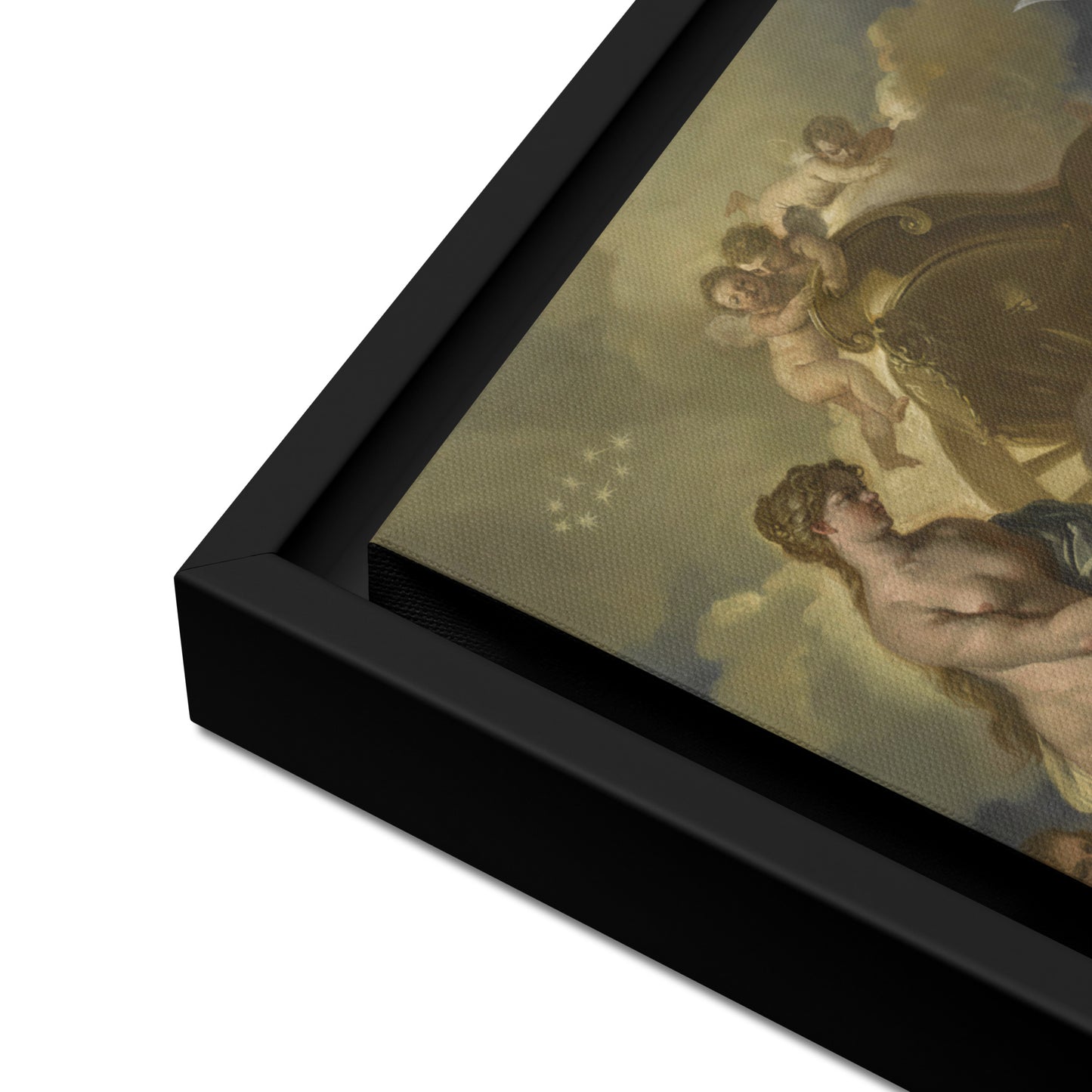
Bacchus and Ariadne: The Greek Myth Behind Solimena's Baroque Masterpiece
Bacchus and Ariadne
Francesco Solimena, c. 1710
Oil on copper
Currier Museum of Art, Manchester, New Hampshire
Francesco Solimena's Bacchus and Ariadne captures one of the most poignant and romantic moments in Greek mythology. Painted around 1710, the small yet exquisitely detailed oil-on-copper masterpiece depicts the instant when despair gives way to hope. Abandoned by the hero Theseus on the island of Naxos, the heartbroken princess Ariadne is discovered by Bacchus, the Roman god of wine, celebration, and divine ecstasy. Their meeting marks not only the beginning of a legendary love story but also the transformation of a forgotten mortal into an immortal constellation.
The story originates in Ovid's Metamorphoses and earlier Greek myths. Ariadne, daughter of King Minos of Crete, famously helped the Athenian hero Theseus defeat the fearsome Minotaur by giving him a ball of thread to guide him safely out of the Labyrinth. After escaping Crete together, the pair sailed away, seemingly destined for a future together. Instead, Theseus abandoned Ariadne while she slept on the island of Naxos, leaving her alone and devastated. The reasons for his departure vary across ancient sources, but every version agrees that Ariadne believed she had lost everything.
At that very moment, Bacchus happened upon the grieving princess. Rather than leaving her to her sorrow, he immediately fell in love with her beauty and compassion. Solimena portrays this encounter with remarkable tenderness, showing Bacchus stepping gently toward Ariadne as if offering comfort rather than conquest. His calm confidence contrasts with Ariadne's vulnerability, transforming what begins as a scene of heartbreak into one of redemption and divine love.
According to the myth, Bacchus married Ariadne and granted her immortality among the gods. As a wedding gift, he presented her with a magnificent golden crown adorned with brilliant jewels. After Ariadne's death, Bacchus cast the crown into the heavens, where it became the constellation Corona Borealis, or the Northern Crown. Solimena alludes to this miraculous ending by including a radiant crown of stars shining above the couple, reminding viewers that even profound sorrow can ultimately give way to eternal glory.
Although modest in size, the painting demonstrates why Francesco Solimena became one of the leading painters of the late Baroque period in Naples. Executed on a smooth copper panel rather than traditional canvas, the work possesses exceptional luminosity and remarkable precision. The polished copper surface allowed Solimena to achieve brilliant colors, delicate transitions of light, and extraordinary detail, giving the figures an almost jewel-like appearance.
Solimena masterfully blends the harmony of classical composition with the theatrical drama of the Baroque. Rich golden light illuminates Bacchus and Ariadne while deep shadows frame the surrounding landscape, creating an atmosphere of intimacy and emotion. His use of dramatic chiaroscuro guides the viewer's attention directly to the two central figures, emphasizing their emotional connection while heightening the sense of divine intervention.
Beyond its mythological narrative, Bacchus and Ariadne explores universal themes of loss, hope, and renewal. Ariadne's journey reminds viewers that life's greatest disappointments can sometimes lead to unexpected blessings. What begins as a story of betrayal ultimately becomes one of love, transformation, and redemption, making the myth one of antiquity's most enduring tales.
Today, Bacchus and Ariadne remains one of Francesco Solimena's finest mythological paintings and a beautiful example of the elegance of the Neapolitan Baroque. Through graceful figures, radiant color, and timeless storytelling, Solimena transforms an ancient legend into a moving meditation on the healing power of love. More than three centuries after it was painted, the work continues to remind us that even in our darkest moments, hope may arrive when it is least expected.