Flora and Zephyr: The Mythological Love Story Behind Amigoni's Rococo Masterpiece
Flora and Zephyr
Jacopo Amigoni, 1730s
Oil on canvas
The Metropolitan Museum of Art, New York
Jacopo Amigoni's Flora and Zephyr is a graceful celebration of love, spring, and renewal, embodying everything that makes the Rococo style so enchanting. Painted during the 1730s while Amigoni was living in England, the monumental canvas combines delicate beauty with classical mythology, creating an atmosphere of effortless elegance. Today, the painting hangs in The Metropolitan Museum of Art, where its luminous colors, flowing drapery, and gentle romance continue to captivate viewers nearly three centuries after it was created.
The painting illustrates the mythological union of Flora, the Roman goddess of flowers and spring, and Zephyr, the Greek god of the gentle west wind. According to ancient mythology, Zephyr fell deeply in love with Flora and made her his bride. Through their union, the earth awakened from winter's dormancy as flowers bloomed, trees blossomed, and nature was renewed. Together they became enduring symbols of fertility, abundance, and the annual return of spring, making their story one of the most joyful allegories in classical mythology.
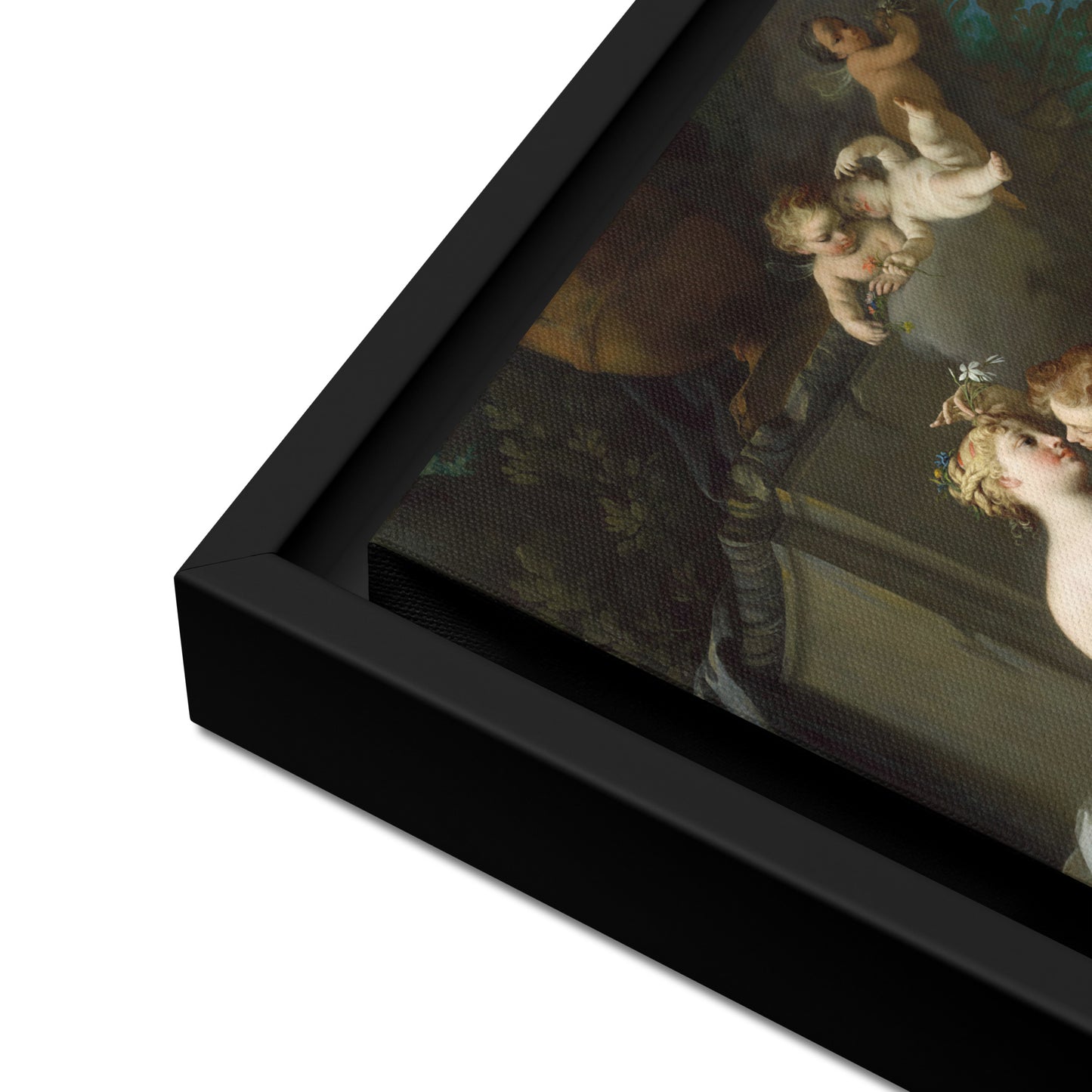
At the center of the composition, Flora sits gracefully upon a stone pedestal draped in flowing white garments, embodying beauty, serenity, and divine femininity. Zephyr leans gently toward her, embracing her in a tender kiss while his feathered wings and billowing golden cloak suggest the movement of a warm spring breeze. Their quiet intimacy forms the emotional heart of the painting, replacing dramatic action with a sense of harmony and affection that perfectly reflects the spirit of Rococo art.
Surrounding the couple are playful putti, the winged cherubs that frequently appear in eighteenth-century European painting. They scatter flowers through the air and drift effortlessly among soft clouds, reinforcing the themes of love, fertility, and nature's rebirth. Every figure contributes to the idyllic atmosphere, creating the impression that the entire natural world is celebrating the arrival of spring alongside the divine couple.
The painting exemplifies the defining characteristics of the Rococo movement. Unlike the powerful contrasts and emotional intensity of the Baroque period, Rococo artists favored lightness, elegance, and refined beauty. Amigoni fills the composition with soft pastel colors, luminous skin tones, graceful curves, and delicate transitions of light that create an almost dreamlike atmosphere. The figures appear to float effortlessly through space, emphasizing beauty and pleasure over theatrical drama.
Jacopo Amigoni was one of the most sought-after painters of his generation. Alongside fellow Venetian artists such as Sebastiano Ricci and Giovanni Antonio Pellegrini, he helped spread the Rococo style throughout Europe. During his years in England, his mythological paintings and aristocratic portraits were especially admired by wealthy patrons, who valued his ability to combine classical subjects with refined elegance and luxurious color.
Beyond its mythological subject, Flora and Zephyr celebrates the timeless cycle of renewal found throughout nature. The arrival of spring has long symbolized hope, rebirth, and new beginnings, themes that resonated deeply with audiences in the eighteenth century and continue to do so today. Amigoni transforms an ancient myth into a universal meditation on love's ability to restore life after the darkness of winter, making the painting as emotionally meaningful as it is visually beautiful.
Today, Flora and Zephyr stands as one of Jacopo Amigoni's finest masterpieces and one of the greatest examples of Rococo mythology. Through its graceful composition, radiant color, and poetic storytelling, the painting captures an idealized vision of beauty that has endured for centuries. More than simply illustrating an ancient legend, Amigoni invites viewers into a world where love, nature, and the changing seasons exist in perfect harmony.