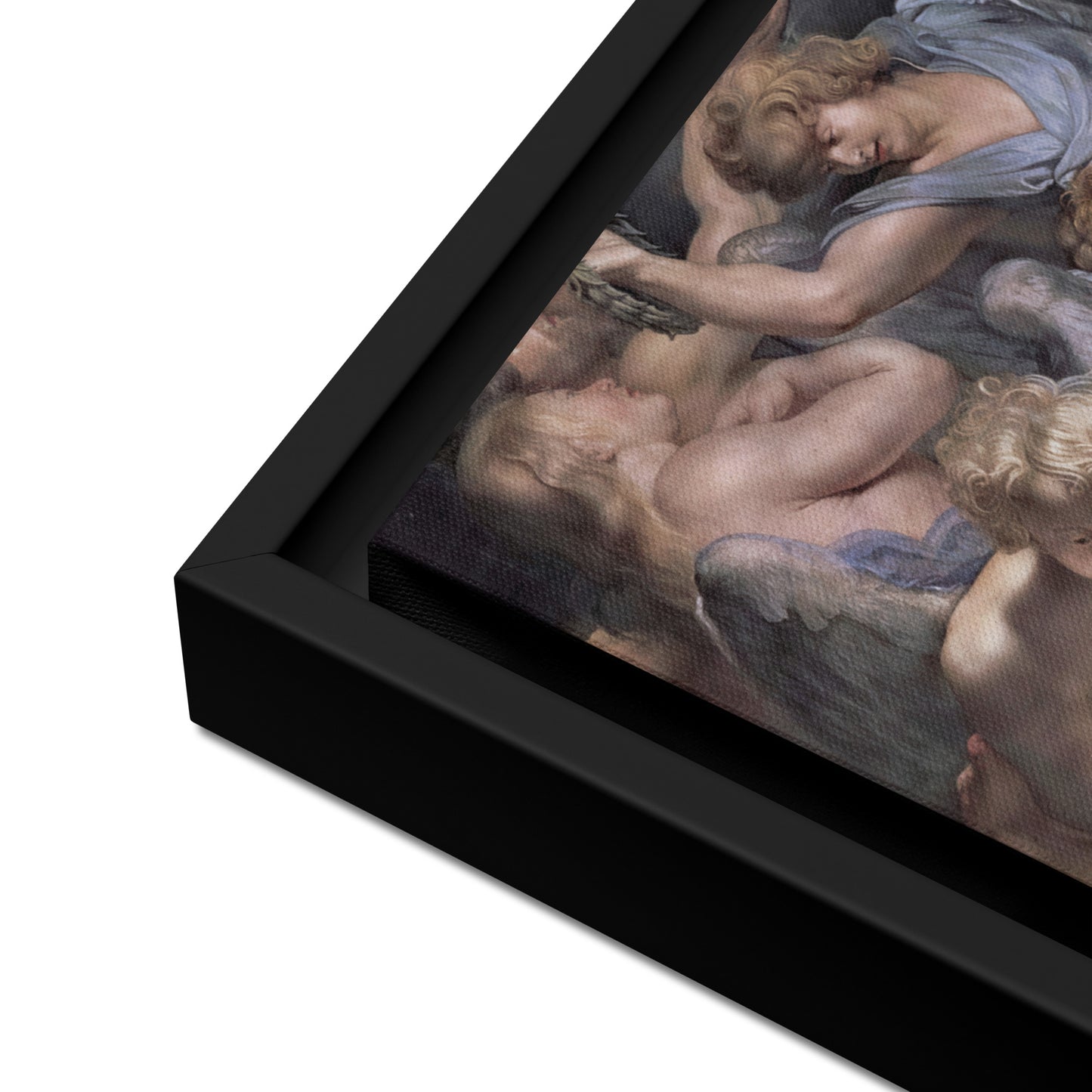
The Great Last Judgement: A Stunning Detail from Rubens' Monumental Masterpiece
The Great Last Judgement
Peter Paul Rubens, c. 1614–1617
Oil on canvas
Alte Pinakothek, Munich
Peter Paul Rubens' The Great Last Judgement is one of the largest and most awe-inspiring religious paintings of the Baroque era. Measuring nearly 20 by 15 feet, the monumental canvas was painted between 1614 and 1617 as the high altarpiece for the Jesuit church in Neuburg an der Donau. The image featured here is a detail from that enormous masterpiece, highlighting one of its most beautiful and emotionally powerful passages. Created during the height of the Counter-Reformation, the painting was intended to inspire both reverence and reflection by portraying humanity's ultimate destiny: the final judgment of every soul.
The complete composition illustrates the dramatic events described in the Book of Revelation and the Gospel of Matthew. At the center sits Christ as the divine judge, with God the Father above him. Beside Christ stand the Virgin Mary and Moses, who holds the tablets of the Ten Commandments. Below them, the dead rise from their graves as the final judgment begins. Humanity is divided into two eternal destinies: the righteous ascend toward heaven on Christ's right hand, while the condemned are cast into hell on his left. Rubens transforms this familiar biblical subject into an overwhelming spectacle of movement, emotion, and spiritual drama.
The detail shown here comes from the left side of the painting, where the blessed are welcomed into eternal life. Powerful angels descend into the crowd, lifting newly resurrected souls upward toward heaven. Rather than appearing passive, the figures strain, reach, and embrace one another with remarkable emotion. Rubens fills this section with muscular, sculptural bodies illuminated by heavenly light, creating an upward movement that conveys hope, redemption, and salvation. It is one of the finest examples of the artist's celebrated "Rubensian" style, characterized by dynamic anatomy, dramatic movement, and extraordinary vitality.
In the full composition, this hopeful vision is balanced by an equally dramatic scene on the opposite side of the canvas. There, the condemned tumble violently downward into darkness as demons drag them toward eternal punishment. Rubens intentionally contrasts the upward movement of the saved with the chaotic descent of the damned, emphasizing the eternal consequences of one's earthly life. Together, the two halves form one of the most compelling visual representations of the Last Judgment ever painted.
The painting was commissioned by Wolfgang Wilhelm, Count Palatine of Neuburg, shortly after his conversion to Catholicism. Intended for the high altar of a Jesuit church, it reflected the goals of the Counter-Reformation, when emotionally powerful works of art were used to strengthen Catholic faith during a period of intense religious conflict. As Europe stood on the brink of the Thirty Years' War, images of divine judgment carried profound spiritual and political significance.
Ironically, despite being created for a church, the painting soon became controversial because of its abundance of nude figures. Rubens viewed the human body as one of God's greatest creations and used idealized anatomy to express both physical beauty and spiritual truth. Church authorities, however, considered many of the figures too revealing for public worship. Portions of the painting were eventually covered, and the altarpiece was later removed from its original location, illustrating the ongoing tension between artistic freedom and religious expectations.
Because of its monumental scale, Rubens relied on one of the largest workshops in Europe to complete the commission. Historians estimate that between ten and twenty assistants helped execute the painting under his supervision. Even so, Rubens personally designed the entire composition and completed its final refinements himself, ensuring that every section reflected his unmistakable artistic vision.
Today, The Great Last Judgement remains one of the defining masterpieces of the Baroque period. Whether viewed in its entirety or through individual details such as the one shown here, the painting reveals Rubens' unmatched ability to combine movement, emotion, and theological meaning on a monumental scale. More than four hundred years after its creation, it continues to stand as one of the most ambitious and unforgettable religious paintings in the history of Western art.