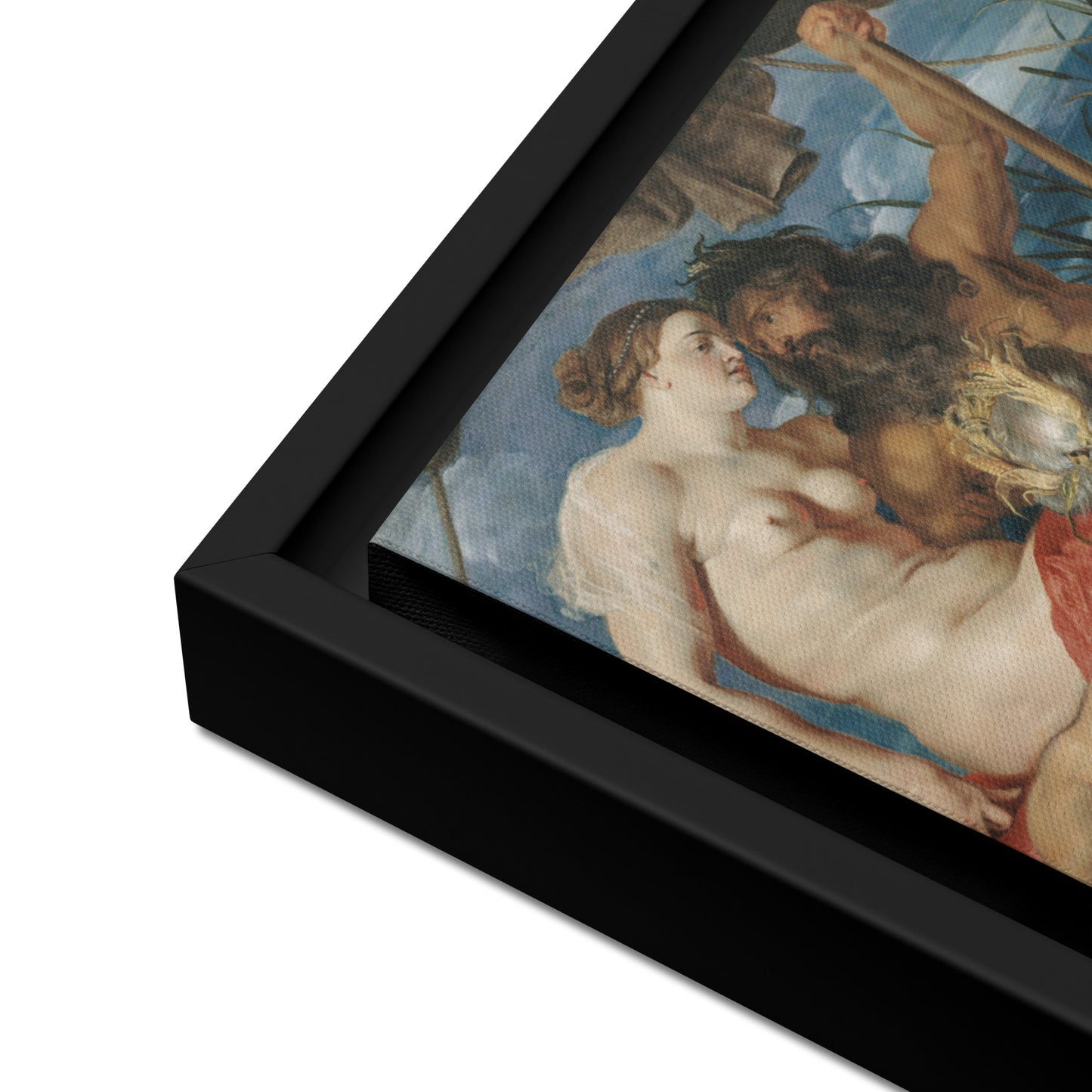
The Miracles of St. Francis Xavier: Rubens' Monumental Baroque Masterpiece Explained
The Miracles of St. Francis Xavier
Peter Paul Rubens, 1617–1618
Oil on canvas
Kunsthistorisches Museum, Vienna
Peter Paul Rubens' The Miracles of St. Francis Xavier is one of the grandest religious paintings of the Baroque period. Measuring over 17 feet tall, the monumental altarpiece was painted for the Jesuit church in Antwerp, now known as the Church of St. Charles Borromeo. Created before Francis Xavier was officially declared a saint in 1622, the painting served not only as a masterpiece of religious art but also as a powerful statement of the Catholic Church's missionary efforts during the Counter-Reformation. Today, it resides in the Kunsthistorisches Museum in Vienna, where it continues to astonish viewers with its scale, movement, and theatrical energy.
The central figure is St. Francis Xavier, one of the founding members of the Jesuit order and among the greatest missionaries in Christian history. During the sixteenth century, Francis Xavier traveled throughout India, Southeast Asia, Japan, and other parts of Asia, preaching Christianity and establishing missions that would influence millions of people. Reports of miraculous healings, exorcisms, and even resurrections quickly spread throughout Europe after his death, becoming a central part of the campaign that ultimately led to his canonization as a saint.
Rather than illustrating a single historical event, Rubens combines numerous miracles into one dramatic composition. Standing elevated above the crowd, St. Francis Xavier extends his hand as people from every corner of the known world gather around him. A blind man reaches toward the saint in hope of receiving his sight. Nearby, a grieving mother holds the lifeless body of her infant, representing the miracle in which Francis Xavier was said to have raised a drowned child back to life during his mission in India. Other figures appear healed of disease, while still others witness the miracles with expressions of astonishment, doubt, or newfound faith.
One of the painting's most striking features is its remarkable diversity of figures. Rubens carefully included people dressed in clothing inspired by China, Korea, India, Africa, and the Middle East to emphasize the global reach of the Jesuit missions. At the center stands a figure wearing East Asian attire, based on one of Rubens' own preparatory drawings. The inclusion of so many different cultures was intentional, illustrating the Jesuit belief that Christianity was a universal faith capable of reaching every nation. Rubens relied on travel accounts, imported objects, and contemporary illustrations to portray these distant cultures with a level of detail that was extraordinary for seventeenth-century Europe.
In the upper portion of the composition, another symbolic drama unfolds. A crowned idol, interpreted as a Hindu deity, tumbles from its pedestal as heavenly light pours into the scene. To European audiences of Rubens' time, this represented the triumph of Christianity over paganism. Today, however, the image is also understood within its historical context, reflecting the missionary ideals and religious attitudes of the Counter-Reformation rather than an objective portrayal of Asian religions. The dramatic collapse of the idol reinforces the central message that divine power surpasses earthly beliefs and false gods.
Rubens' unmistakable Baroque style brings every inch of the enormous canvas to life. Figures twist and surge in every direction, brilliant reds and blues guide the viewer's eye across the composition, and shafts of heavenly light illuminate St. Francis Xavier amid the surrounding chaos. Before beginning the final painting, Rubens completed numerous life studies of individual figures, refining their anatomy and gestures to ensure that every movement contributed to the emotional intensity of the scene. The result is a composition that feels almost cinematic, drawing the viewer directly into the unfolding miracle.
The painting also reflects the broader goals of the Catholic Counter-Reformation. Following the Protestant Reformation, the Church increasingly commissioned emotionally powerful works of art that would inspire devotion and reaffirm Catholic doctrine. Miracles occupied a central role in this effort, serving as visual proof of divine authority and the sanctity of figures like Francis Xavier. By presenting healings, resurrections, and conversions within a single monumental composition, Rubens transformed theology into a vivid spectacle capable of moving both the heart and the imagination.
The altarpiece itself has survived a remarkable journey. After serving for generations in the Jesuit church in Antwerp, it was acquired by the Austrian Empress Maria Theresa following the suppression of the Jesuit order in the eighteenth century. It eventually entered the collections of the Kunsthistorisches Museum in Vienna, where it remains one of the museum's greatest treasures. More than four centuries after it was painted, The Miracles of St. Francis Xavier continues to stand as one of Peter Paul Rubens' most ambitious achievements—a breathtaking fusion of faith, missionary history, and the dynamic energy that defines the Baroque.